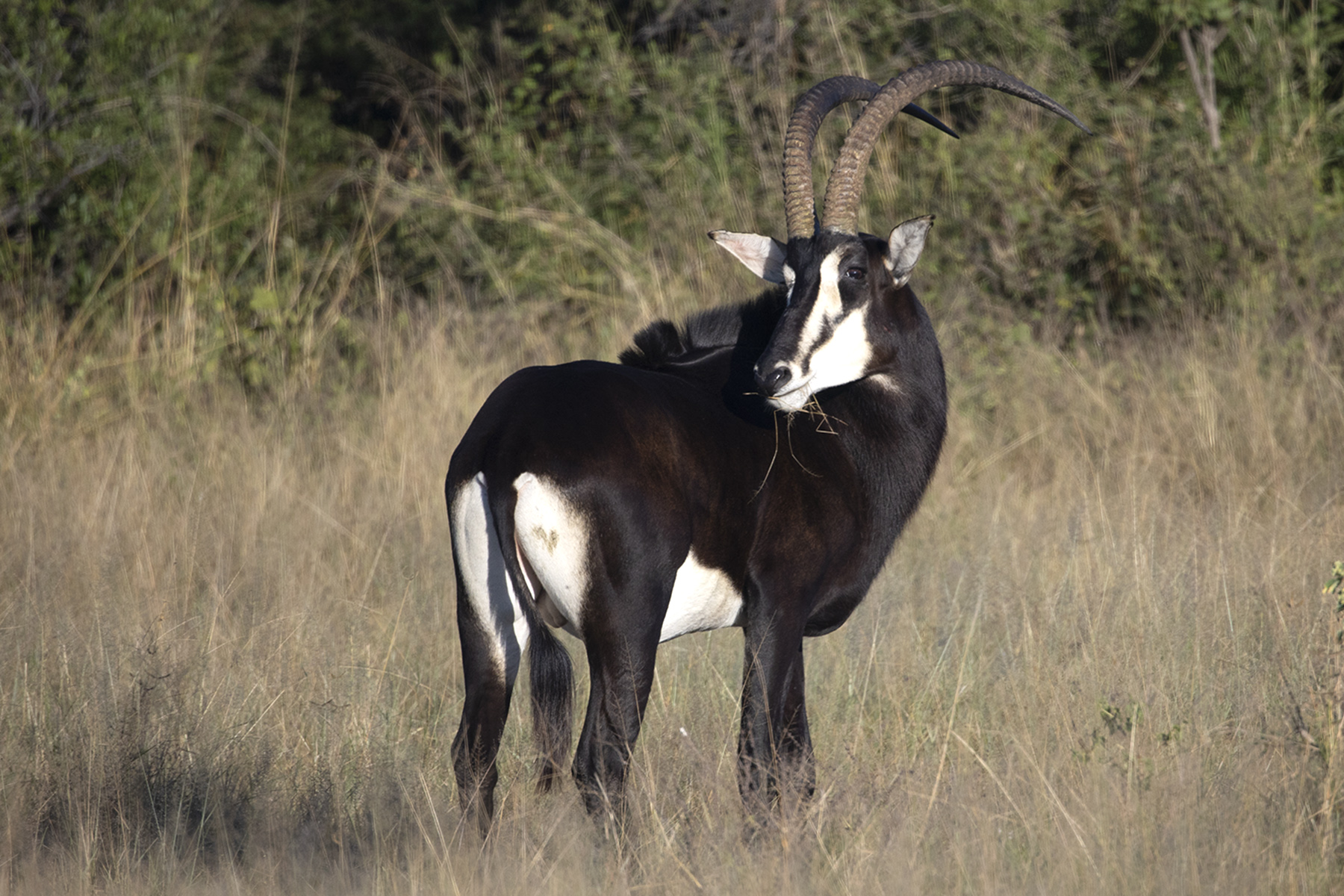
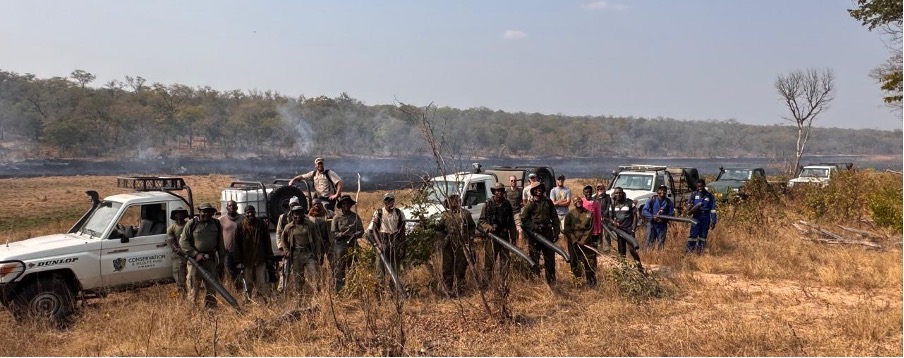
As Spring dawned on Hwange, so the hike in temperature began, accompanied by inordinately persistent winds. For three of the four weeks during September, the mercury climbed steadily, peaking at a scorching 38°C before plunging to a chilly 11°Cat month-end as rain showers swept in. We embarked on the hottest month of the year – (October) dressed in winter woolies country wide, with puddles glistening across the landscape. In Hwange, early rains are celebrated for the promise they bring, but the electrical storms associated with them can spark enormous bushfires. Firefighting teams were regularly dispatched far and wide to bring the flames under control. Collaborative efforts are key in this regard and we’re grateful for the strong relationships with partner organisations that make these efforts possible.
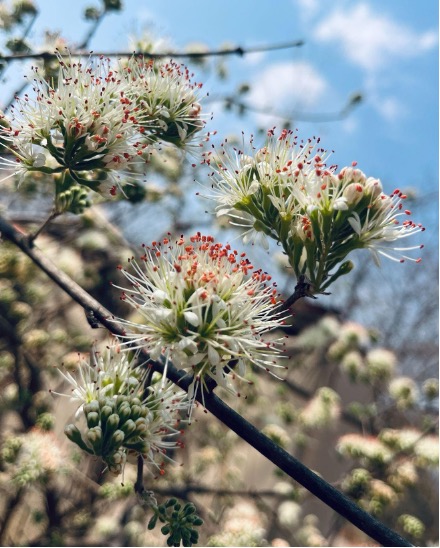 The WEZ Annual Game Census always brings a sense of anticipation. “The Count” was held early this year, but the bush was already loud with new life, transforming from dry and dusty to the soft, shifting palette of spring: pretty lilac clouds of Philenoptera nelsii, bridal white showers of Shaving-brush Bushwillow, (Combretum mossambicense) and the Camelthorns (Vachellia erioloba) standing out like shining evergreen beacons. Trees and shrubs unfurled their new leaves, while emerald shoots pushed through the bleached, golden grass.
The pre-count flyover revealed a park still reaping the rewards of last season’s generous rains. Free-standing water was widespread and elephant herds were still largely gathered in the west.
With dire predictions of a super El Niño looming, the outlook might seem bleak, but for now the pressure on water points remains manageable.
The result of the Game Count will be interesting to see as the debate of “too many elephants” rages on. There seems to be little evidence in Hwange to support that notion so far this year!
Habitat Management
Game Water
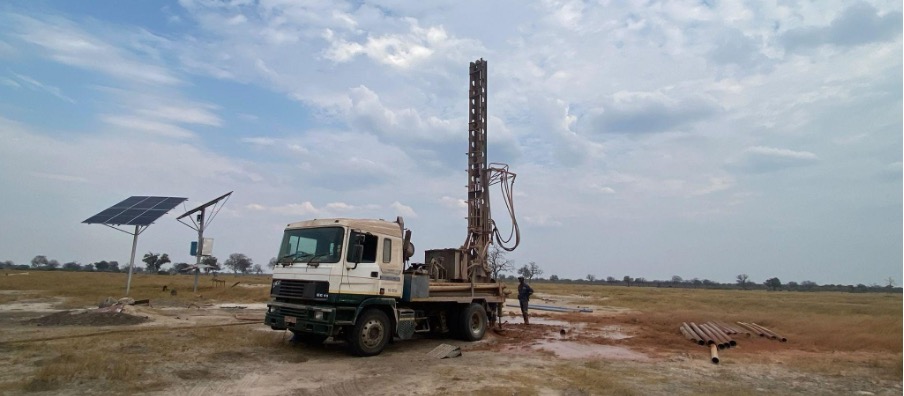
Despite decent water levels in the pans, the game water team is being kept constantly busy. A semi-collapsed borehole at Ngweshla was deemed to be beyond salvage, so a fresh hole was drilled and fitted with existing equipment.
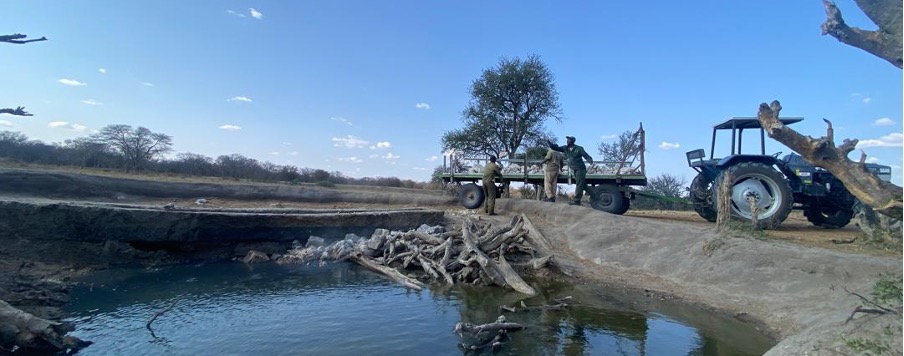
Elephants pulling up piping at Mabuya Mabema led to a multi-day reroute back to the old trough, moving the outlet away from ongoing erosion.
A call-out to Dopi led to resets on both Hober inverters. While there, the trough was cleaned out and a section of polypipe replaced where a weeping hole had left it vulnerable to unwelcome elephant attention.
Hyena-damaged cables at Makwa and Makona were replaced and two loads of rock went to Boss Long One to fill areas of concern, while a load of aggregate was delivered in readiness for repairs to the trough.
A sleeper frame was dropped off at Mbiza to protect the exposed outlet pipe to the pan. A number of visits to Umtchibi were required to fine-tune the inverter settings, while an old spent inverter at Sicheche needed replacing. Forster Irrigation has been requested to follow up on the Nyamandhlovhu overload fault, and the long-awaited Manga 1 Sunsynk inverter should reach Hwange from Bulawayo shortly.
Fireguards and Roads
The state of the Park’s roads continues to draw outcry from operators and tourists, but thanks to diesel from various lodge partners, the FOH tractors, harrows and tow graders have been busy and the following have been attended to: The Kennedy 2 road (32 km, thanks to The Hide), both White Hills routes via Guvalala (40 km, sponsored by ZimParks and Camp Hwange) and via Tchabema (47 km, sponsored by Imvelo), as well as the Kaoshe to Shapi fireguard (23 km, appreciation to Imvelo). The Main Camp to Caterpillar turn-off was also dragged ahead of the Wildlife Ranger Challenge 21km run, with fuel sponsored by Conservation Wildlife Fund (CWF).
 Resource Protection
Patrol Operations:
- Two seven-day patrols were conducted on Farm 31 opposite the railway line from Mbiza.
- Bindondale, Carl Lisa, Farm 41, Hwange Safari Lodge and the Nkonkoni concessions have been regularly patrolled.
- The first official patrol was undertaken from the new Mambanje base camp this month.
- The annual 24-hour Game Count conducted by WEZ commenced as usual this year within HNP. Our rangers did 24hr counts at 3 pans outside the park which included Nkonkoni 1, Nkonkoni 2 and Marara Lister Pan. It was most pleasing to note the increase in game from last year’s count in the Gwayi.
Illegal Activity Monitoring:
- A bushmeat trader in the Gwayi township was arrested.
- Fifteen wire snares set for guinea fowl were collected along the Mambanje river.
- Farm 31 – harvesting of thatching grass and ration hunting were evident. This was sanctioned by the resident land owner of one small strip of land and contributed tension to the ongoing disputes.
- Two ranger teams responded to a call for law enforcement assistance on Karna Lot 8 along the Shangani river. More than 203 assorted wire snares were recovered from the riverbanks, and a poacher was arrested for possession of 76 guinea fowl snares. He has since been convicted and sentenced to 12 months in prison of which 3 months were suspended for 5 years on condition of good behaviour. Unsurprisingly, very little game was sighted on Karna due to the poaching onslaught by local villagers.
- Most other areas had no illegal activities detected during local patrols, save for one or two illegal entries by a hunting vehicle on Bindonvale vlei in the Gwayi ECA that disappeared the moment our teams showed up.
Capacity Building and Training:
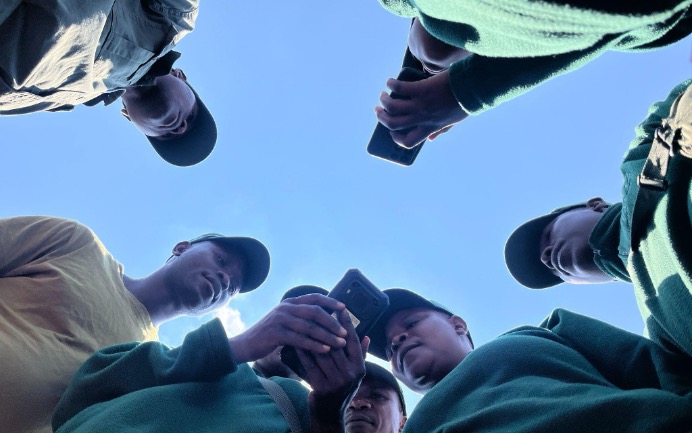 SMART (Spatial Monitoring and Reporting Tool) training, conducted by Panthera, was attended by all of the FOH rangers. This three-day event was aimed at building an understanding of the SMART software and the importance of correct data capture.
It was followed by 2 days of admin training for four FOH staff to demonstrate and understand how to download the data collected.
The new rangers started both theoretical and practical tracking lessons. More attention must be paid to improving this critical skill
Focus was directed at imparting survival skills in the wilderness. Food and water gathering, fire mitigation measures, navigation skills and survival under dire conditions in the wilderness were the topics covered.
Infrastructure Development:
The Hwange Rural District Council (HRDC) senior scout inspected our base camp at Mambanje and permission to proceed was granted. Pits for a Blair toilet and shower soak away were dug and their construction of the camp was completed. Panthera has kindly offered additional funding to provide additional necessary equipment for this base camp.
- Albert and four senior rangers were introduced to the Mabale Ward 16 and 17 leadership and community at a meeting hosted by the local councilor and the HRDC management. Many questions were asked as regards our mandate, but the community was generally welcoming.
- A Starlink unit was purchased and installed at the HSL Barracks for improved communications and to assist with technological capacity for data capture.
- The barracks require attention from a plumber due to seepage in the walls.
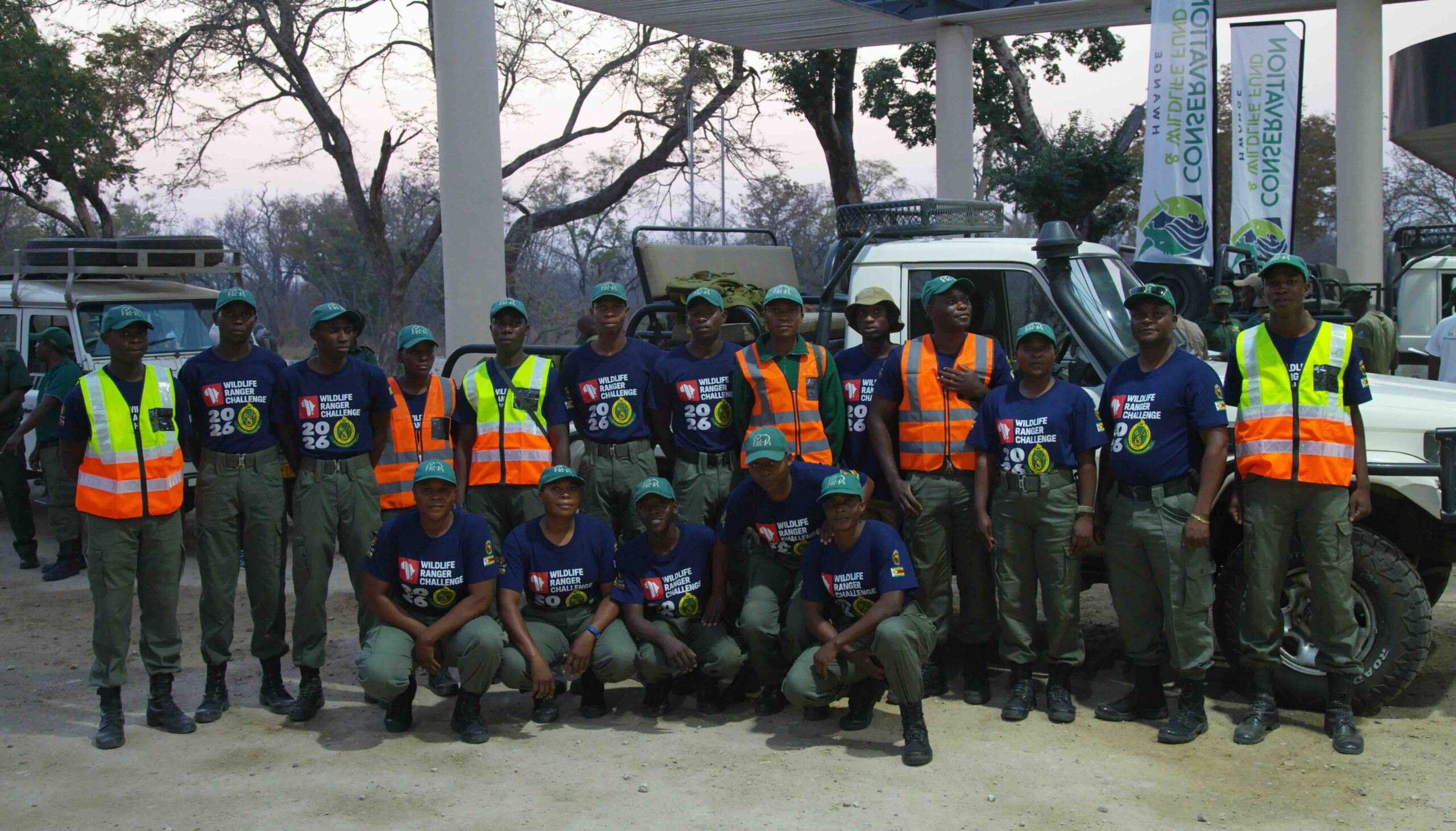
Wildlife Ranger Challenge 2026:
Various challenges were undertaken for the Wildlife Ranger Challenge 26 (WRC26). To kick off the event, an online quiz was successfully completed. In the press-ups challenge, our men’s team scored high points at local level but unfortunately didn’t score well enough where it counted mostm however, our ladies team achieved a highly commendable 2nd place overall in the sit-ups challenge. A 2.4km unweighted time trial was completed early in September, building up to the main event. On the 19th of September, FOH, CWF, ZimParks, Painted Dog Conservation, Mother African Trust, Dete Animal Rescue Trust and Forestry Commission came together, along with a multitude of local supporters to run the Wildlife Ranger Challenge 21km race. The event is aimed at raising support and awareness for wildlife rangers across the continent.
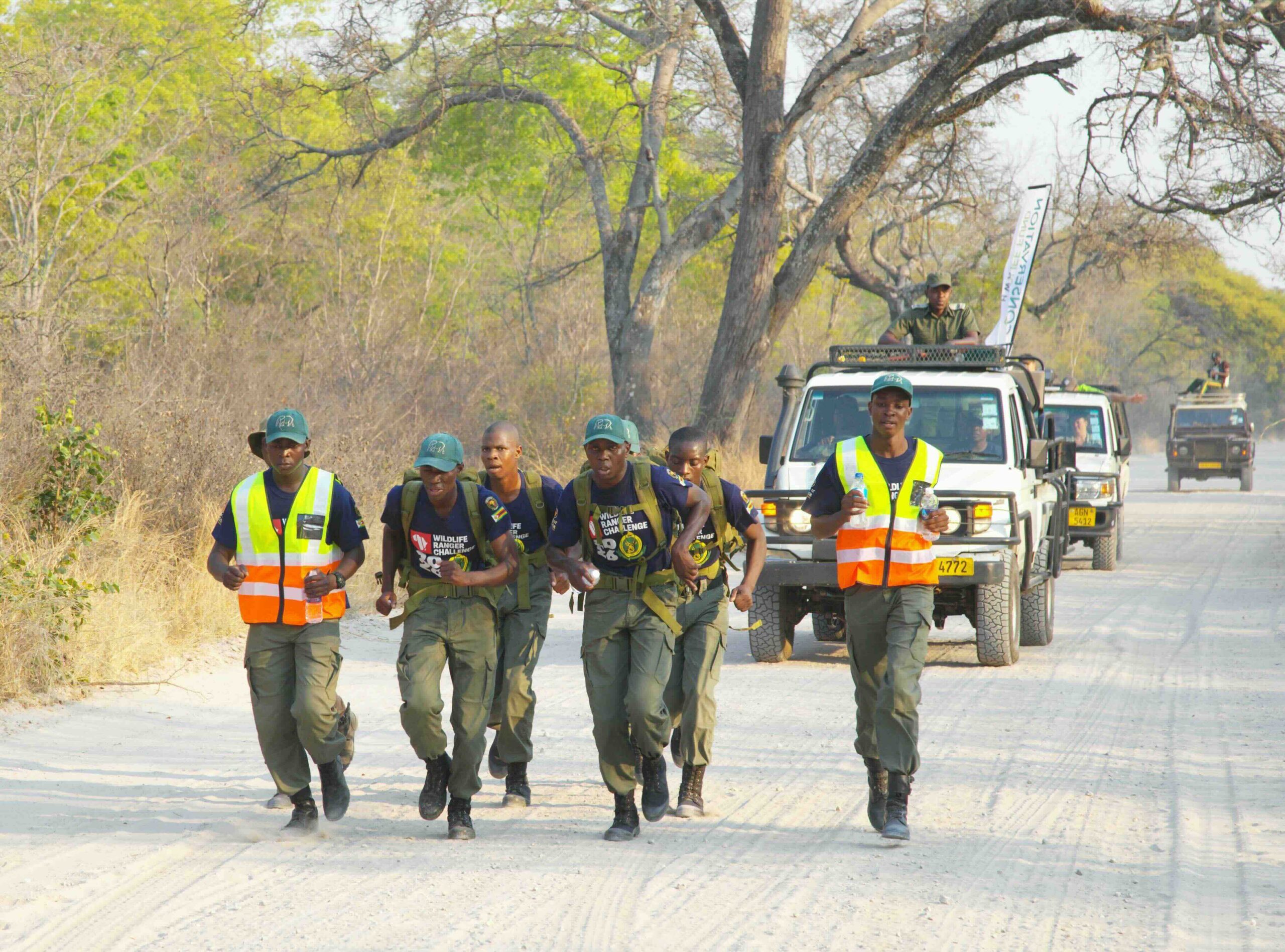 This year, race day was electric. Our FOH men’s and ladies teams competed with unbelievable grit, determination and support of each other that had us bursting with pride. They placed 1st respectively in their categories at local level and very commendably across the continent. Their achievements deserve high accolade, especially as first-time competitors.
Much appreciation must go to TUSK and the Game Ranger Association of Africa (GRAA) for their efficient organisation and efforts to run this wonderful event.
Twelve new rangers (8 women and 4 men) recruited as of 1 June 2026 signed a fixed-term contract at the beginning of September having successfully completed their probationary period. This enthusiastic and disciplined group joins our stalwart eight senior rangers and together they are proving to be effective out in the field.
Four Community Liaison Officers from various surrounding communities will be appointed to facilitate and grow community engagement. In conjunction with local authorities, potential suitable candidates are being identified.
The supply of water to the barracks worsened during September resulting in water being fetched in drums from Main Camp at times of extreme need. A permanent solution to address this problem may be to drill a borehole of our own to become self-sufficient funds permitting.
Vehicles and Implements:
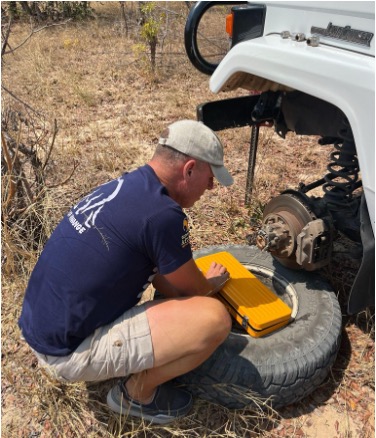 The past few months have been busy for the workshop, with the Ford and TD 95 tractors serviced, the harrow rebuilt, and new batteries and tyres fitted to two vehicles, the latter at generously discounted prices from Tiger Wheel and Tyre. Several vehicles remain in need of attention: AGV 7049 is out of service awaiting a compatible freewheel hub, Nissan ADM 9680 is waiting on a fuel pump and suitable rims, and AGE 1925 has an intermittent bearing noise that will be addressed once the higher-priority vehicles are up and running.
Gwayi ECA support
A tractor and trailer combination transported materials for Great Plains to the Nkonkoni, Farm 41 and Farm 31 areas of the Gwayi Ecological Conservation Area (ECA). The roads on Farm 41 were harrowed in support of the Greater Hwange Landscape Resource Protection Coalition.
Sincere Thanks
To the Great Plains Ranger Protect Scheme for support of ranger salaries.
The Saville Foundation for support for our ranger programme.
To Simon and Anne Isherwood their ongoing, generous support.
To Wolfgang Hennig and Saving Endangered Wildlife for his consistent, ongoing support.
To The Hide, Imvelo, ZimParks and Camp Hwange for fuel to do some road work.
To CWF for diesel to drag the road for the WRC 2026.
To the Sothern Africa Conservation Trust (SACT) for sponsoring medical insurance for our managers, field staff and rangers.
To Panthera for the donation of a computer, several SMART devices and for providing in depth SMART training for our managers and rangers.
To Biddulphs International and Kiggin Construction for regular deliveries of provisions for Hwange pro bono.
To Ezytrack for the installation and subscription of vehicle tracking pro bono
To Verneys Camp (Machaba) for their support
To all who have donated via PayPal, facilitated by the Hwange Conservation Society UK.
Conclusion
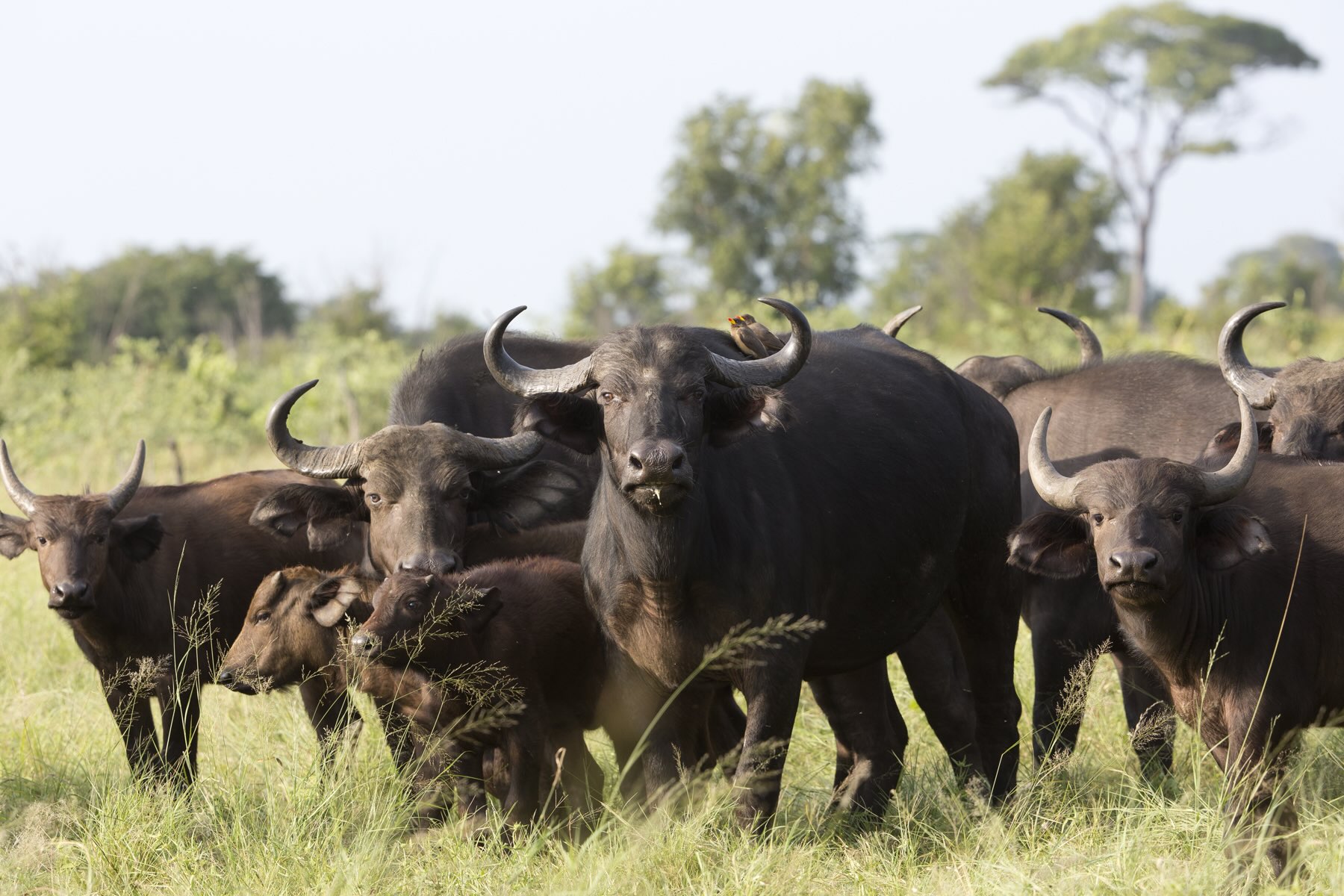
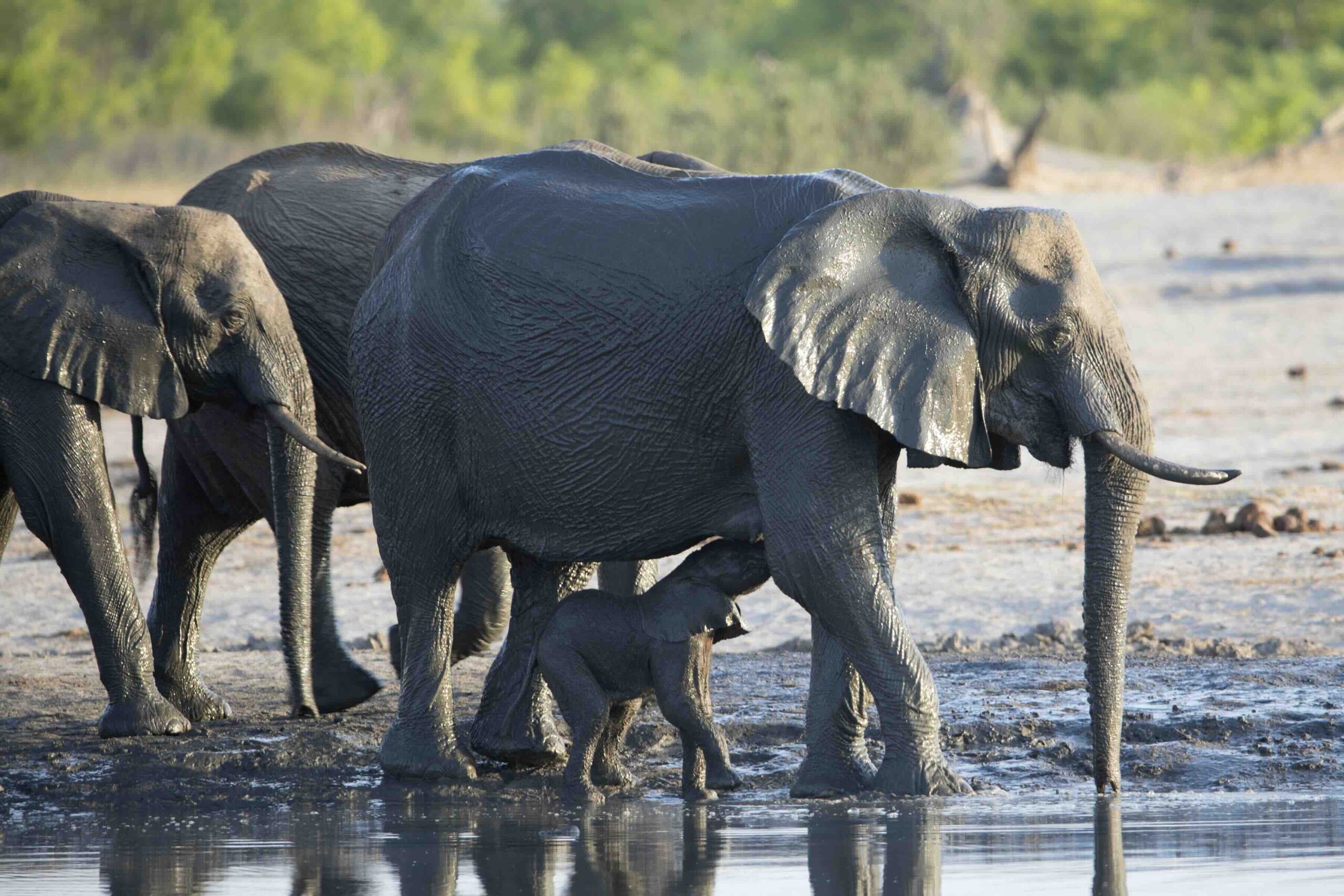
Although the water situation in Hwange seems satisfactory for now, we must be prepared for whatever nature throws at us in the coming months. When the dry season bites, every drop matters. Water scarcity shapes migratory patterns, survival, and holds ecosystems together. Each waterhole we safeguard sustains an entire community of life, from elephants and buffalo to the countless smaller species that rely on it.
At the same time, the scarcity of water makes waterholes a prime target for poaching. Our anti-poaching teams patrol the surrounding bush, removing snares and deterring poachers thereby safeguarding the wildlife that gathers. Protecting water and protecting wildlife work together hand in hand, but we are dependent your help to do it and every donation, no matter the amount, counts towards our goal.
Thank you for standing with us – and with the Greater Hwange Landscape
To donate use the link at the top of this page.
Finally, we extend appreciation to ZimParks: The Director General, the Regional Area Manager, the Senior Area Manager and the Staff on the ground at Main Camp in HNP.
Reporting Carmen McGregor and Paula Dell
Image credits: Carmen McGregor and Dave Dell